
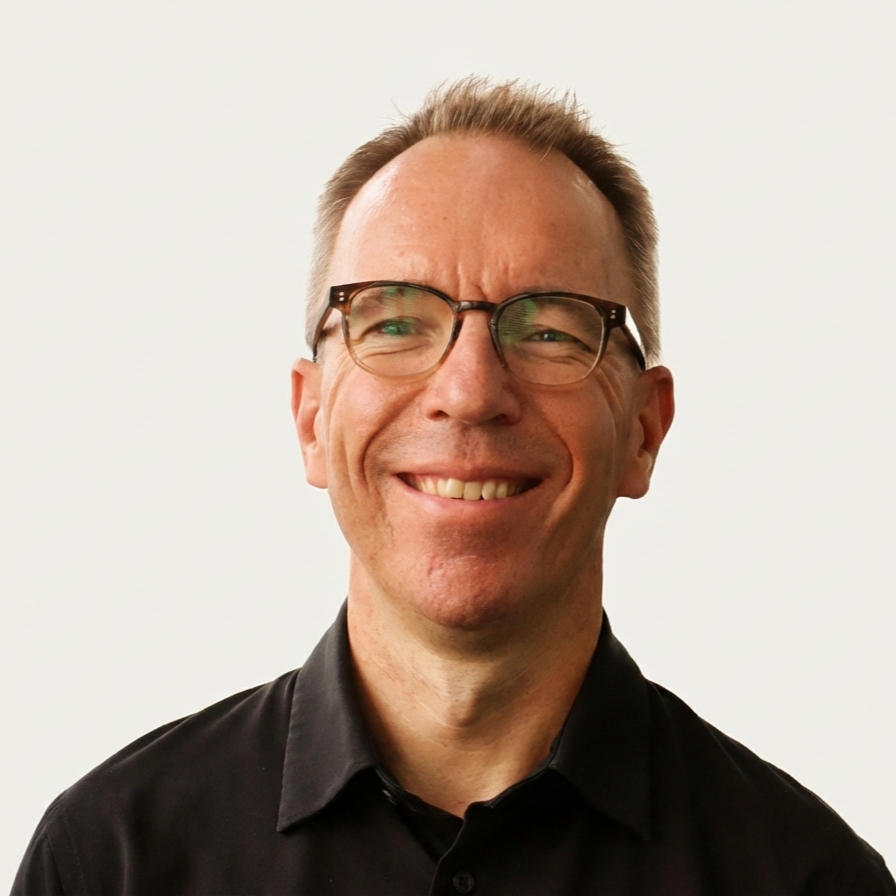
José Durán did not begin with a polished framework. He began with mistakes.
He says it plainly. They trusted leaders they thought were the right people, and they were not. They were, in his words, 'like rookies.' At first, they did not really understand the city, the worldview, or the deeper work of city transformation. They focused too narrowly on people who believed like them. They mistook activity for progress. And over time, one truth kept forcing its way to the surface: trust, trust, trust.
That honesty matters because it tells the truth about where many city leaders actually live. Across the Lausanne Cities deep dives, the same ache keeps surfacing in different accents: isolation, fragmentation, lonely leaders, event energy without long-term fruit, and a longing for collaboration real enough to carry the weight of a city. North America names fragmentation, burnout, mistrust, and activity without durability. Oceania names the trap of serving the city mainly to grow one church. South Asia names the sheer scale of the task and the impossibility of one organization carrying it alone. Europe names post-Christendom, marginality, and churches that must rediscover their public calling. Africa names the urgency of a fast-growing, young, urbanizing continent where movement streams are forming, even as whole-city ecosystems are still emerging.
That distinction matters. We have not yet identified one city with a fully functioning whole-city ecosystem where prayer, witness, service, marketplace leadership, church unity, youth formation, civic engagement, research, and local ownership operate together in mature collaboration. What we have seen is more modest and more honest: streams of movement. A prayer breakfast. An evangelistic campaign. A marketplace initiative. A scholars cohort. A city expression. A unity table. A research project. A prayer canopy.
These streams are real. They are partial. They are promising. They are not yet the whole river.
So what if the question is not whether God is stirring city movements? What if the deeper question is whether we are learning how those streams grow, join, deepen, and mature over time?
From the continental deep dives, a working answer is beginning to emerge. The clearest language for it comes from José Durán's journey in Latin America, but it is echoed and strengthened by what we heard from JP in South Asia, Greig Whittaker in Oceania, Rob Kelly and Daria Nardozza in North America, Piet Brinksma in Europe, and Movement Day Africa leaders across the continent.
That pathway is simple enough to remember and deep enough to test:
TRUST: Trace. Relate. Unite. Structure. Transfer.
The TRUST Pathway was not developed as a pre-set model. It emerged through a listening journey across six continental deep dives, using AI-assisted synthesis to help identify recurring patterns from transcripts, presentations, and source material. The final framing, theological interpretation, and editorial responsibility were shaped by Jacob Bloemberg in conversation with the Lausanne Cities Network.
But TRUST is not a rigid blueprint, branded product, or closed system. It is not a five-step road cities complete once and graduate from. It is more like a river system than a highway — closer to the Amazon than a road, as José said. Many tributaries. Many entry points. Some currents visible. Some hidden. Some strong. Some seasonal. Always moving. Always receiving new stories. Always reshaped by context.
TRUST is a shared learning language for a journey city leaders travel again and again.

Trace
Every true movement begins by seeing.José says there is a lot already happening in the city, and leaders must learn to ask what is happening, who is already serving, and what God is already doing there. City movements do not begin when a ministry arrives with its own plan. They begin when leaders stop centering their organization and start tracing the living realities of a place.
JP gives one of the strongest pictures of this. In Kolkata, his team mapped the city's pin codes and discovered that more than one hundred had no church presence at all. When those realities were shown to city leaders, churches began adopting unreached places. The red zones started turning yellow. The city became visible in a new way, and with that visibility came responsibility.
Greig Whittaker tells the same truth personally. God confronted him not only with, 'You do not love your city,' but also, 'You do not know your city.' We can work hard in a place and still never really see it. Trace means letting Jesus teach us to see the city truthfully.
Piet Brinksma gives the European language for the same practice: exegesis of the city. In a continent shaped by Catholic, Orthodox, Protestant, secular, post-Christian, migrant, and state-church realities, leaders must study before they prescribe. Who lives here? Where is the pain? Where is hidden service? What histories shape trust or mistrust? Where has the church withdrawn? Where has God kept witness alive at the margins?
Africa deepens Trace by forcing us to read the times as well as the city. Peter Watt opened with the sons of Issachar — people who understood the times and knew what Israel should do. He then named the African context: 54 nations, 1.5 billion people, 160 to 170 cities with more than one million people, nearly 20 percent of the global population, but less than 3 percent of global GDP. By 2050, Africa is expected to represent one in four people on earth and more than 40 percent of global youth. That is not background information. It is theological and missional discernment. To Trace in Africa means paying attention to youth, poverty, cities, population growth, economic gaps, migration, energy, land, and the future of the global church.

Relate
Once a city is seen, the next move is not scale. It is relationship."Trust is the currency of the kingdom of God."
This is where José's voice becomes especially strong. Not efficiency. Not charisma. Not visibility. Trust. And trust takes time. It is built by listening, humility, repeated conversations, mistakes, and the discovery that other leaders have also heard from the Lord about the same city.
Magnolia Gudiel's devotional gives this movement a beautiful image. She retells the story of the friends who carried the paralyzed man to Jesus, broke open the roof, and lowered him into the room. Then she asks the question that lingers over the Latin America deep dive: are you willing to do crazy stuff with your friends — and for your friends? That is trust embodied. Friends who carry. Friends who improvise. Friends who do not let obstacles end the story.
North America adds a quieter but important note. Daria says leaders need friends on the journey because this work is lonely. In city work, loneliness is not a small problem. It is a structural problem. If leaders remain alone, collaboration remains thin.
Africa reminds us that prayer is not merely a spiritual activity beside the pathway. Prayer is often the environment where trust begins. Richard Sempala described Uganda's planned 24/7 prayer initiative for 2026, targeting 500 churches in five cities praying nonstop for one week. That is not yet a fully functioning whole-city ecosystem. But it is a serious movement stream. Leaders and believers across Kampala, Soroti, Lira, Masaka, and Mbarara are being invited to carry the city together in prayer.
Prayer, then, is not just one step inside TRUST. It is a current running through the whole pathway.

Unite
Trust cannot remain private. At some point it must become a table.José speaks of the 'superpower' of convening the right people. Not any crowd. The right leaders. He is honest that they invited some leaders who were not the right leaders and had to begin again. But the lesson held: the event is not the movement. The event serves the movement. A city begins to change when leaders gather around the city's flourishing rather than around their own brand.
"I want My city."
Greig Whittaker gives the richest story here. God stopped his hopes for 'a few more' in his church and said those words. That sentence shattered the smallness of his vision. From there came the journey into oneness tables, where leaders gather with Jesus at the center and learn to move from 'my church' to 'we church.' For Greig, this is repentance. It is a reformation of the church for the sake of the city. And those relationships become the railway tracks on which mission can move.
Europe gives another version of unity. Piet described how churches at the margins often rediscover their need for one another. In Amsterdam Southeast, migrant churches began to see themselves not merely as ethnic congregations preserving identity, but as missionary communities placed in the city. Hidden service became visible. Shared witness became more credible.
Esther Chengo grounded Africa's unity in Nehemiah. Nehemiah did not say, 'Come support my project.' He communicated a kingdom vision for God's city. He inspected the broken walls, named reality, and invited diverse groups to find their place in one larger mission. Priests, goldsmiths, merchants, rulers, and families rebuilt different sections, but they worked toward one shared restoration. Esther's point was clear: kingdom transformation happens when diverse stakeholders recognise that they are part of one larger mission.
Africa also shows unity through several streams: Uganda through prayer across five cities, Accra through citywide evangelistic mission, Zambia through the National Prayer Breakfast, and Movement Day Africa through continental and regional leadership. These are not yet the whole ecosystem. But they are real tables where trust can thicken and shared action can grow.

Structure
This is where many movements either mature or stall."Events are easy; process is hard."
Latin America is especially helpful because José says what many leaders know but rarely admit. In his context, people are good at gatherings, but they do not always follow through. That is why clear process became a breakthrough. Leaders needed pathway, coaching, and accountability. They needed to move from inspiration to a roadmap they could actually walk.
Rob Kelly and Daria Nardozza shine here. They say city movements do not grow by accident. They require vision, trust, language, coaching, and patient development. Their tree language reminds us to cultivate roots, not merely chase fruit. Frameworks, in their best sense, are not bureaucracy. They are scaffolding for faithfulness.
JP strengthens this from another angle. In South Asia, structure includes scholars, alliances, prayer canopies, and decadal plans. The city is not only seen. Leaders are formed, plans are made, and movements are given enough shape to endure time.
Africa brings the strongest continental structure into the conversation. Movement Day Africa's 2030 vision is a movement of City Gospel Movements for the spiritual, social, and generational flourishing of African cities. Its mission is framed around three verbs: Collaborate through strategic partnerships, Curate African-focused research, and Convene integrated gatherings. Its strategy adds four movement levers: Develop relational ecosystems and learning groups, Focus intentionally on young people, Gather integrated leaders across spheres, and Multiply from 25 city gospel movements toward 50 African cities by 2030. The Movement Day Scholar Program now has presence in 39 African cities from 2020 to 2026, along with 2025 city expression events across 24 cities, bringing together 620 leaders from 200 organisations. That is significant light backbone: continental leadership, regional leaders, leadership development, city expressions, and learning groups.
Still, structure must stay humble. The wrong tool at the wrong time can damage trust. Structure is not control. It is light backbone that helps trust endure without choking local life.

Transfer
A movement is not healthy until it can live beyond its first convener.This is why Transfer matters. José says the goal is not dependence on one outside leader or one ministry. It is local ownership. Guatemala is his clearest example: leaders trained in Guatemala City are now reproducing in other cities. It is not outsiders doing the work for them. It is local leaders carrying it with their own flavour.
North America describes the same reality as meta-networks and ecosystems. Mature cities often need more than one collaborative expression. They become networks of networks. They share insight, adapt what works, and keep learning together. Spread is not about celebrity. It is about circulation — of wisdom, trust, tools, and ownership.
South Asia points in the same direction through scholars, city engagement, prayer canopies, and decadal vision across many cities. Leaders become students, and students become leaders. Cities learn from cities. The work moves outward not by control but by transfer.
Africa gives strong evidence of transfer in motion. Uganda is forming leadership teams in five cities. Accra showed trained scholars stepping into citywide mission. As Afia Darkwa-Amanor reported, more than 50 people had gone through the Movement Day leadership development process, with over 30 scholars involved in the Accra mission. That mission reached 121,133 people, recorded 6,214 decisions, and trained 530 missioners. School outreach alone reached about 33,000 pupils, with 4,135 decisions. Accra is a powerful evangelistic collaboration stream — not yet proof of a fully mature whole-city ecosystem, but clear evidence of what happens when trained leaders move from learning into shared action. Transfer begins when local leaders stop attending a movement and start carrying it.
Zambia shows another kind of transfer: into public leadership space. The National Prayer Breakfast gathered political, civic, business, and church leaders around prayer, reconciliation, integrity, and national responsibility. Lutangu Lubasi described national leaders gathering across political lines and the 2026 event hosted on Parliament grounds with 330 attendees. It is not the whole ecosystem. But it is a significant stream of witness, reconciliation, and leadership formation.
More Than an Acronym
TRUST is not the whole story. It is pathway language for an unfinished journey. Across every step, five realities keep appearing: prayer, service, witness, strengthening, and learning.
South Asia shows prayer woven into everything — from scholars to city canopies to long-range plans. Africa intensifies prayer as unity infrastructure in Uganda and public leadership formation in Zambia. Oceania shows that service is not a side ministry but part of the church's public witness in the city, as believers become 'friends to the brokenness' around them. North America shows the necessity of strengthening: roots, formation, coaching, patience, durability. Latin America reminds us that witness travels most credibly through trusted relationships. Europe teaches us to look carefully at hidden service, migrant leadership, marginal churches, and public credibility in post-Christendom cities.
Africa adds one more gift: urgency without triumphalism. The continent is young, urban, growing, and profoundly significant for the future of the global church. It also faces deep poverty, infrastructure gaps, and enormous urban strain. That combination demands more than celebration. It demands listening, partnership, humility, research, prayer, and locally owned collaboration.
And all of this sits inside a larger Lausanne conviction. The Cape Town Commitment urges the global church to give urgent strategic attention to urban mission, to love our cities with holy discernment and Christ-like compassion, and to seek flexible methods that respond to urban realities. TRUST may be one such flexible language — still provisional, still testable, still being painted and refreshed by stories from many places.
So we should not say, 'Here is the model. We are done learning. Now we will teach everyone.' We should say the opposite: we are barely getting started. Please share your stories. Tell us where trust is growing. Tell us where collaboration is hard. Tell us what failed. Tell us what surprised you. Tell us which movement streams are beginning to flow in your city.
The Choice Before Us
Here, then, is the choice before us.
If we do not learn this pathway, we will likely keep repeating familiar patterns: leaders carrying burden alone, events that generate excitement but not endurance, networks shaped more by personality than by trust, and cities left waiting while the church circles around itself.
But if we do keep learning it — if we trace what Jesus is already doing, relate long enough for trust to deepen, unite around the city rather than our brand, structure pathways that can carry real faithfulness, and transfer the work so it becomes local, durable, and multiplying — then something beautiful may happen. Churches may begin to love one another in public. Leaders may stop competing and start listening. Movement streams may begin to join. Local ownership may grow. Hope may spread.
This does not mean the pathway will ever be perfect. It will be journeyed again and again. Every city will expose new questions. Every continent will add new colours. Every story will refine the language. The pathway will keep forming as leaders walk it together.
So perhaps the call now is not to arrive in our cities with a master plan. Perhaps the call is simpler and harder than that.
Trace.
Relate.
Unite.
Structure.
Transfer.
And maybe Magnolia's question is still the right one to end with: are we willing to do crazy stuff with our friends — and for our friends?
Because trust is not a stage to complete. Trust is a current to keep moving in.
Explore the pathway in depth, or read the Latin America field notes where the TRUST language surfaced most clearly through José Durán's presentation and began to be tested against the wider listening journey.
The TRUST Pathway Latin America field notes