
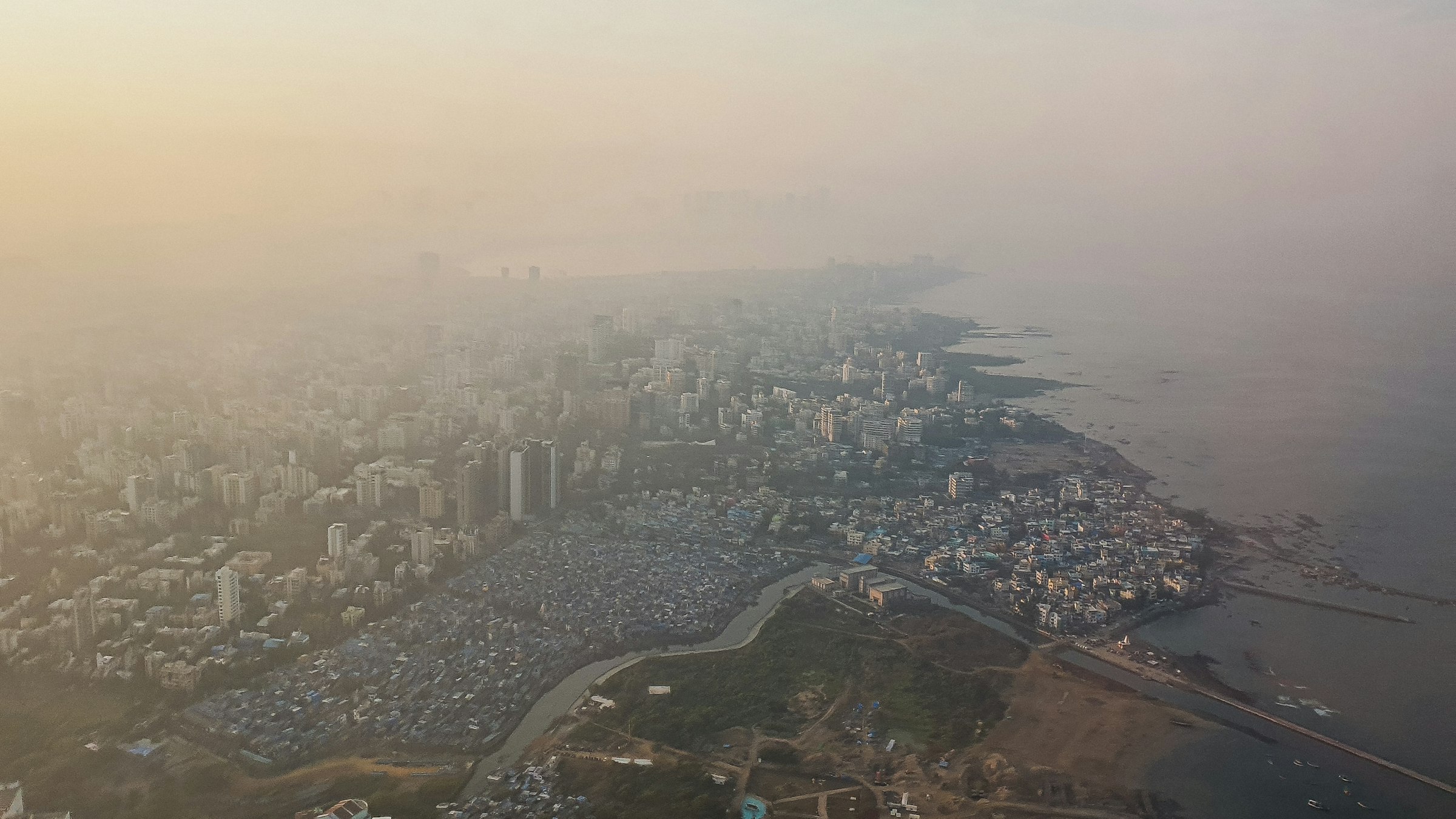
"Cities are changed not by occasional gathering things, but by consistent intercession offered by faithful people over time." — Amos, Siliguri, 18 years of prayer for his city
The numbers demand to be sat with slowly.
South Asia is home to 25% of the global population — one in four people on earth. Of those, more than 55% identify as Hindu (1.12 billion people) and less than 2% know Jesus Christ. The pace of urbanisation is staggering: by 2050, more than half the region is projected to live in cities — and South Asian cities are already among the world's largest and most complex urban agglomerations.
And in Kolkata, in 2020, when leaders began mapping the city by postal code, they found that 103 of its 226 pin codes had zero churches.
These are field notes from an early conversation in the listening journey — before the shared TRUST language had fully taken shape. What we heard from South Asian leaders were patterns of faithfulness built over years and decades. The names came later. The practices had been there all along.
Why we listened this way
These field notes come from a listening journey, not a fixed framework. We were looking for two things: common practices God seems to be using across very different city contexts, and unique contextual practices other leaders might adapt for their own settings.
Read more about the listening posture
These deep dives were not designed to confirm a pre-existing model. The invitation was simpler and more patient: to slow down and genuinely listen — to regional leaders describing what God seems to be doing in their own contexts, in their own words.
The TRUST language had not yet fully emerged when this conversation took place. We were listening without a framework to test, looking simply for patterns of faithful city work — practices that had outlasted programmes, relationships that had outlasted strategies, movements that had grown through patience rather than ambition.
What we heard from South Asia stayed with us. When the TRUST language began to take shape through later conversations, we recognised patterns we had already heard here. That is not proof that the framework was right. It is an observation worth sitting with: the evidence came before the names.
What we heard from South Asia
South Asia is not a category. It is India's ten-million-person cities and Siliguri's Himalayan foothills and the island networks of Sri Lanka and the specific weight of a region where more than half the world's Hindu population lives alongside enormous concentrations of Muslim, Buddhist, and Sikh communities — and where Christians are, in most contexts, a small minority.
JP, who leads city movement work out of Chennai, frames the regional context with clarity. According to Pew Research Center projections (2015), India is projected to have the world's largest Muslim population by 2050 — while remaining a Hindu-majority nation. South Asia is already home to some of the world's largest concentrations of unreached peoples. The region's spiritual complexity requires leaders who do the patient, honest work of understanding their context before attempting to serve it.
Kolkata: 103 pin codes with no church
The Kolkata mapping exercise was not a study of the possible. It was an honest study of the actual. 226 pin codes. 446 churches. By simple arithmetic, there is more than one church per pin code on average — yet 103 of those codes have none at all. The churches that exist are unevenly distributed. Whole neighbourhoods of the city are without a Christian witness.
Seeing this honestly is an act of courage. It requires leaders to look past the vitality of their own congregation and ask a harder question: what is the whole church doing for the whole city? That is the question the Kolkata Movement Day Expression began to answer when it convened in 2020 — and when leaders walked out having adopted 42 of the empty pin codes for intentional church planting.
"In Kolkata: 226 pin codes. 446 churches. 103 with zero Christian witness. The map does not lie — but it also does not have to stay that way."
Siliguri: eighteen years and a Saturday rhythm
In Siliguri, in the foothills of the Himalayas, Amos has been gathering leaders every Saturday for eight years. Not occasionally. Every week. The rhythm is the point. "Cities are changed not by occasional gathering things," he says, "but by consistent intercession offered by faithful people over time."
Eighteen years of praying for his city. Eight of those years with a weekly gathering of other leaders. That kind of consistency builds something that strategy cannot manufacture: a shared spiritual language and a common trust, formed through years of showing up together in dependence on God.
"Consistent intercession is not just a spiritual practice. It is the foundation of trust between leaders who otherwise have no reason to collaborate."
The Manipur crisis made this visible in an acute way. When churches in Manipur faced persecution — buildings burned, congregations displaced — the response of the city movement network was not merely social or organisational. It was prayer. One hundred hours of sustained chain prayer, offered across the region by leaders who had built the relational capacity to mobilise at speed. Within months, 20% of the closed churches had reopened. The prayer had created not just intercession but a network of solidarity — leaders who trusted each other enough to act together under pressure.
The South Asia SALT (Study, Advance, Lead, Transfer) monthly gathering for city leaders serves a similar function: regular rhythms of encounter that build the relational infrastructure beneath strategy. People of peace are identified through vision-sharing — through the kind of honest conversation about cities that creates the mutual respect from which collaboration grows.
Early patterns we later recognized
Before we had a shared language for describing how city movements grow, we were listening to what South Asian leaders were already doing. Several patterns stood out — not as confirmation of a theory, but as discoveries.
The first was the discipline of honest city mapping. Leaders in Kolkata did not guess at the gaps in church presence — they mapped them. The honesty of that exercise, requiring church leaders to look past the vitality of their own congregations and ask what the whole church is doing for the whole city, felt less like a strategy and more like a moral commitment. You cannot serve what you refuse to see clearly.
The second was the role of sustained, consistent prayer in building relational trust. Amos's Saturday gatherings were not a prayer meeting attached to a programme. They were the programme. Eighteen years of showing up together in dependence on God built the kind of relational infrastructure that the Manipur network needed to mobilise in a crisis. The trust was there before it was needed, because someone had been cultivating it for years.
A third pattern was a sequential, Scripture-rooted framework for gathering and growing city leaders — the Nehemiah model — drawn from the Hebrew Scriptures by leaders who understood their own context deeply. The model gave cities a shared grammar for movement work without flattening the differences between them. It was not imported from the West. It came from within.
Running beneath all three was something harder to name at the time: a deep conviction that faithfulness over the long arc matters more than the speed of results. Amos praying for eighteen years. Leaders adopting pin codes with a multi-year commitment. A scholars programme building ten-year city plans. The South Asia conversation kept returning to time — not as an obstacle to mission but as its medium.
Common practices that seemed transferable
When we look back at what we heard from South Asia through the lens of the TRUST language that emerged through later conversations, certain practices become easier to name. These are not claims that the framework was applied here — the shared language had not yet taken shape when this conversation took place. But what leaders described seems, in retrospect, to echo what Trace, Relate, Unite, Structure, and Transfer are trying to point at.

Trace
Mapping what isn't there.What we heard from South Asia on this point: leaders doing the patient, honest work of seeing their city as it actually is, not as they hoped it was. The Kolkata pin code mapping is the clearest example — 226 codes studied, 103 gaps named, the whole picture made visible before any action plan was drawn up. What the TRUST language later called Trace, South Asian leaders were already practising: clarity before strategy, honesty before action.
That discipline extends to the religious landscape. South Asia's spiritual complexity — Hindu, Muslim, Buddhist, Sikh, Christian — requires leaders who have genuinely studied their context. According to Pew Research Center projections (2015), India is set to have the world's largest Muslim population by 2050, while remaining a Hindu-majority nation. Understanding a region of this scale requires sustained, patient attention before any faithful response becomes possible.

Relate
Prayer as the language of trust.What we heard from South Asia on this point: that sustained, consistent prayer is not a supplement to the work of building trust between leaders — it is the mechanism by which trust is built. Amos's eighteen years in Siliguri; the SALT monthly gatherings where leaders identify people of peace through honest vision-sharing; the Manipur prayer network that mobilised because relationships had been built long before a crisis demanded them.
The word the TRUST language later chose for this stage — Relate — names something that South Asian leaders were practising with unusual intentionality. They were not waiting for shared strategy to create shared trust. They were building trust through shared dependence on God, and then discovering that strategies became possible on that foundation.

Unite
The Nehemiah model, five blocks at a time.The framework the South Asia movement uses to structure city engagement draws from one of Scripture's most practical books: Nehemiah. The five-block model organises city movement work into a coherent sequence:
- Identify — survey the city; know its geography, its gaps, its spiritual landscape
- Intercede — prayer as the foundation, not the supplement, of action
- Gather — convene leaders across traditions around a shared city vision
- Intensify — deepen relationships and collaborative action across sectors
- Increase — grow the movement; multiply leaders and expressions
The model is not imported from the West. It is drawn from the Hebrew Scriptures and applied in Asian cities by Asian leaders who understand their context. That it provides a grammar for gathering diverse leaders around a shared city vision — which is what the TRUST language later called Unite — is something we noticed only in retrospect.
The South Asia Movement Day Expressions have taken root in Chennai, Siliguri, Kolkata, and Dubai. Each expression convenes church, marketplace, NGO, and youth leaders around the shared question: what does this city need from the whole church? By 2026, a new expression is planned for the Middle East — evidence of how the model travels when embedded in trusted relationships.
"Nehemiah didn't start with a plan. He started with grief, then prayer, then a clear understanding of what the city needed. South Asian leaders are learning to do the same."

Structure
Training the leaders the cities will need.The Movement Day Scholars Program (MDSP) is the structural backbone of the South Asia city movement. Its three-level design moves participants from foundational city theology through collaborative practice to a full decadal plan for their city — a ten-year vision and strategy document produced by the leader themselves, accountable to the network.
Blessi, who coordinates the MDSP, describes its reach: 75 cities are in the initiate phase, 40 cities are praying weekly for their city, and a smaller cohort is in active intensification and multiplication stages. Participants include not just pastors but marketplace professionals, NGO workers, and youth leaders — a deliberate choice that reflects the conviction that city transformation requires the whole body, not just the ordained.
"By 2050, 70% of South Asia's population will live in cities," Blessi has said. "We need trained leaders in those cities now." The MDSP is building them.
Greater Hyderabad — home to more than 10 million people, with literacy above 83% (Census of India, 2011), and one of India's fastest-growing tech and financial centres — gives the ambition its frame. Leaders there are not operating from the margins. They are operating at the centre of one of the world's most dynamic cities, and they are building a decadal plan worthy of it.

Transfer
Red turning to yellow.The Kolkata pin code map uses a simple colour system: red for pin codes with no church presence, yellow for codes where planting has begun. In 2020, 103 were red. By 2026, 42 pin codes have been adopted by leaders committed to establishing a presence. Red is beginning to turn to yellow — slowly, pin code by pin code, but unmistakably.
Not a grand launch from a central headquarters, but the quiet multiplication of faithful local presence across a city so large that no single church or denomination could cover it alone. The movement made it possible to see the gaps, name them publicly, and invite leaders to take ownership — each one responsible for a specific geography, a specific community, a specific portion of the city's spiritual map.
"From 103 red pin codes to 42 adopted — not because of a programme, but because leaders who prayed together were willing to go together."
Contextual practices from South Asia
Some of what we heard from South Asia is specific to this region's scale, complexity, and religious landscape. These practices may raise useful questions for other contexts, but they emerged from conditions that are not universal and should not be imported without care.
Pin code mapping as a city diagnostic
The granularity of the Kolkata mapping exercise — postal code by postal code, church by church — is a practice suited to dense South Asian urban geography and to a context where a city's spiritual landscape is not broadly known. The specific method may not translate to every city type, but the underlying commitment — knowing the actual state of the city before deciding what to do — seems widely applicable.
The Nehemiah model as a Scripture-rooted framework
The decision to ground the city movement framework in the book of Nehemiah — rather than in Western church-growth models or imported ministry frameworks — is a specifically South Asian theological and cultural choice. Its five-stage sequence (Identify, Intercede, Gather, Intensify, Increase) gives cities a shared grammar for movement work that comes from within the tradition rather than being borrowed from elsewhere. That localisation may be more important than the specific framework itself.
SALT monthly gatherings and people-of-peace identification
The South Asia SALT (Study, Advance, Lead, Transfer) monthly rhythm is a structured practice for identifying leaders — people of peace — through sustained, regular encounter rather than through institutional channels. The deliberate monthly frequency, and the emphasis on honest city conversation as the mode of identification, is a contextual response to the relational culture and the scale of the South Asian network.
Movement Day Expressions as regional multiplication
South Asia is too large for any single hub to serve. The Movement Day Expressions model — city-based gatherings in Chennai, Siliguri, Kolkata, Dubai, and beyond — is a regional multiplication strategy that preserves local ownership while connecting to a shared framework. The model works because the relational trust is built locally, and the network learns regionally.
Decadal planning as a formation practice
The MDSP's requirement that participants produce a ten-year city vision is not primarily a planning tool. It is a formation practice — requiring leaders to think at the scale of a generation, to articulate what transformation looks like in their specific city, and to become publicly accountable to a long-term vision. In contexts where church culture rewards short-term results, this is a countercultural discipline.
What South Asia contributed to the emerging pathway
South Asia was one of the earliest conversations in the listening series. We were not yet looking for a framework — we were simply listening. And what leaders here were already doing stayed with us through all the conversations that followed.
The Kolkata mapping exercise gave us a picture of what honest city diagnosis looks like at its most rigorous: not an estimate of where churches are, but an actual map of where they are not. That commitment to seeing the city as it actually is — including the gaps, including the hard numbers — shaped how we heard all the conversations that came after it.
Amos and Siliguri gave us a picture of what it looks like to build the relational infrastructure for a city movement before a movement exists to join. Eighteen years of prayer, eight years of weekly gatherings — the slow, patient, consistent work of cultivating trust between leaders who had no formal reason to collaborate. When the Manipur crisis came, the network was ready. The investment had already been made.
Specifically, South Asia contributed to the emerging pathway:
- Honest city mapping as a moral practice. Seeing the gaps in church presence, naming them publicly, and inviting leaders to take ownership of specific geographies — the Kolkata model made the invisible visible in a way that activated collective responsibility.
- Prayer as the foundation, not the supplement. Amos's Saturday rhythm and the Manipur solidarity network both demonstrated that the kind of trust that makes city movements possible is built through sustained prayer before it is ever tested by shared strategy.
- The Nehemiah model. A sequential, Scripture-rooted framework for city movement work, developed from within the tradition by leaders who understood their context — not borrowed from elsewhere. It helped show that the best frameworks come from deep local roots.
- A long time horizon. South Asia's leaders consistently spoke of decades, not programmes. The MDSP's ten-year planning discipline, Amos's eighteen-year commitment, the multi-year pin code adoption — all of it pointed toward the same conviction: faithfulness over time is the medium through which city movements grow.
Lessons for city leaders
- See the city as it actually is. The Kolkata mapping exercise required leaders to look past congregational vitality and ask what the whole church is doing for the whole city. Honest diagnosis is an act of courage — and it is also the only foundation for action that holds.
- Build the relational infrastructure before you need it. Amos was not gathering leaders every Saturday because a crisis was coming. He was gathering because that is what faithfulness looks like. When the crisis came, the network was ready. Relationships built in ordinary time serve movement work in urgent time.
- Let the framework come from inside, not outside. The Nehemiah model is not a Western import. It comes from the Hebrew Scriptures, applied by South Asian leaders who understand their own context. The most durable city movement frameworks tend to grow from deep local and theological roots.
- Think in decades, not programmes. The MDSP requires leaders to write a ten-year city vision. That is not primarily a planning exercise — it is a formation practice, asking leaders to take responsibility for the long arc of their city's transformation.
- Make the invisible visible. 103 pin codes with no churches. The number only became generative when it was made public. What is your city's equivalent — the gap in presence or witness that no one has yet named publicly?
Questions for your city
- If you mapped your city by neighbourhood, where would the gaps in church presence be — and who knows about them?
- Is there a leader in your city who has been praying consistently for years, building trust with other leaders before any movement existed to join? Have you found them?
- What would it look like to gather church, marketplace, NGO, and youth leaders around the single question: what does this city need from the whole church?
- Are the frameworks your city movement uses imported from another context — or do they have roots in your own theological and cultural tradition?
- If you were asked to write a ten-year vision for your city, what would you say — and who would you be accountable to for keeping it?
These field notes draw from the Lausanne Cities South Asia Deep Dive, part of the 2025–2026 continental listening series. Stories, reflections, and practices are reported as shared by participating leaders and have not been independently verified by Lausanne Cities.
Watch the full conversation, explore the emerging TRUST Pathway, read other continental deep dives, or join the network to receive what comes next.
Watch the deep dive ► Explore the TRUST Pathway Other deep dives Join the network →